
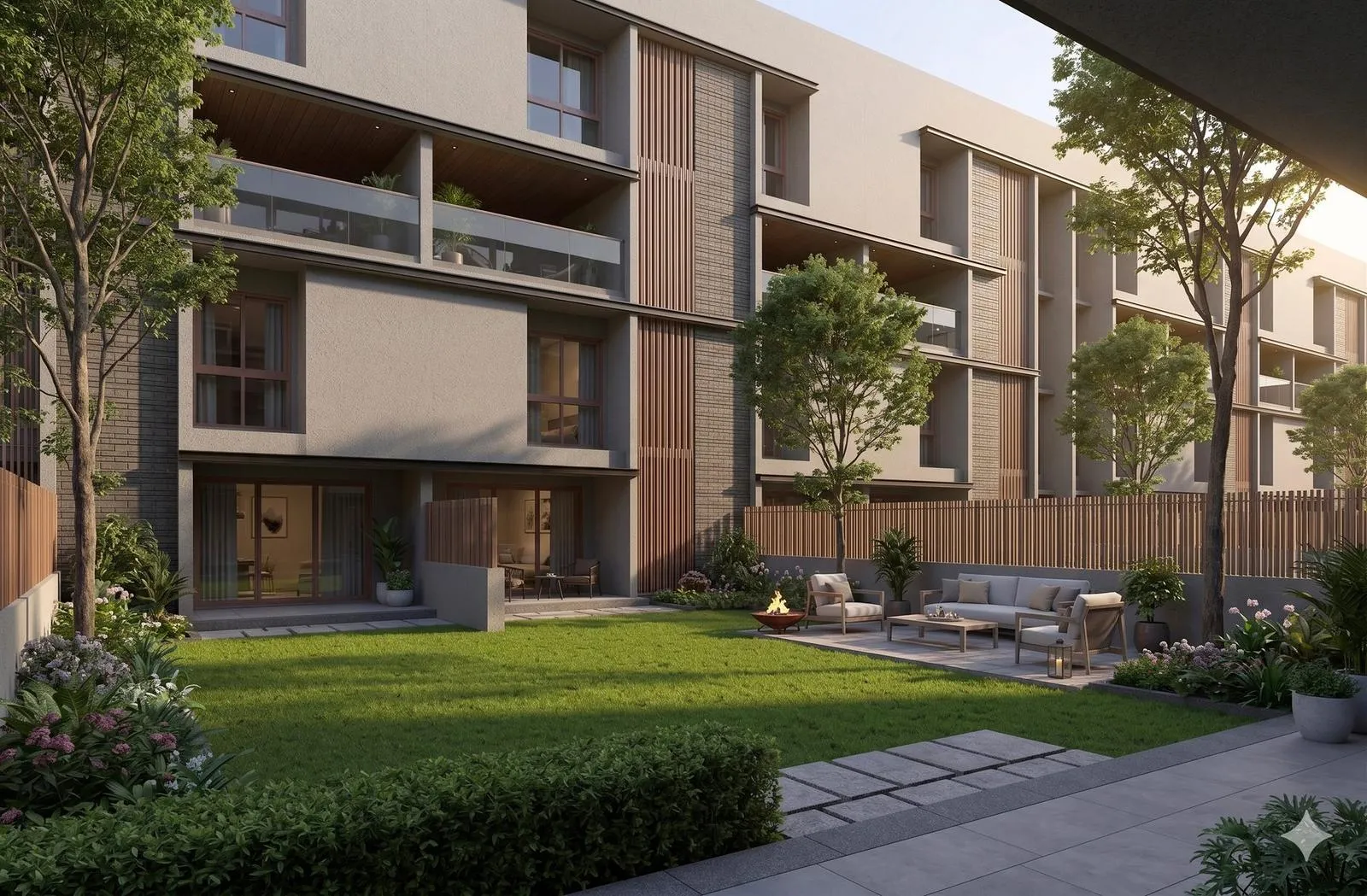
A villament price in Bangalore is usually higher than the price of a flat with the same number of bedrooms, and usually lower than a villa on its own plot. The reasons are concrete: how much land each home carries, how big the home is, how much private garden or terrace comes with it, and how few neighbours share the cost of running the place.
This guide takes each of those in turn, using Assetz Mizu & Ki off Hennur Road as the worked example because its sizes are published. It then shows how to compare villament cost per square foot in a way that holds up, even before you have a price in hand.
What is the Mizu & Ki price right now?
Starting figures quoted for Mizu & Ki in different places do not agree, so we do not print one here. The only number worth using is the total on a current, unit wise price sheet for the exact home you want. Ask us for the current Mizu & Ki sheet and we send it with every line shown.
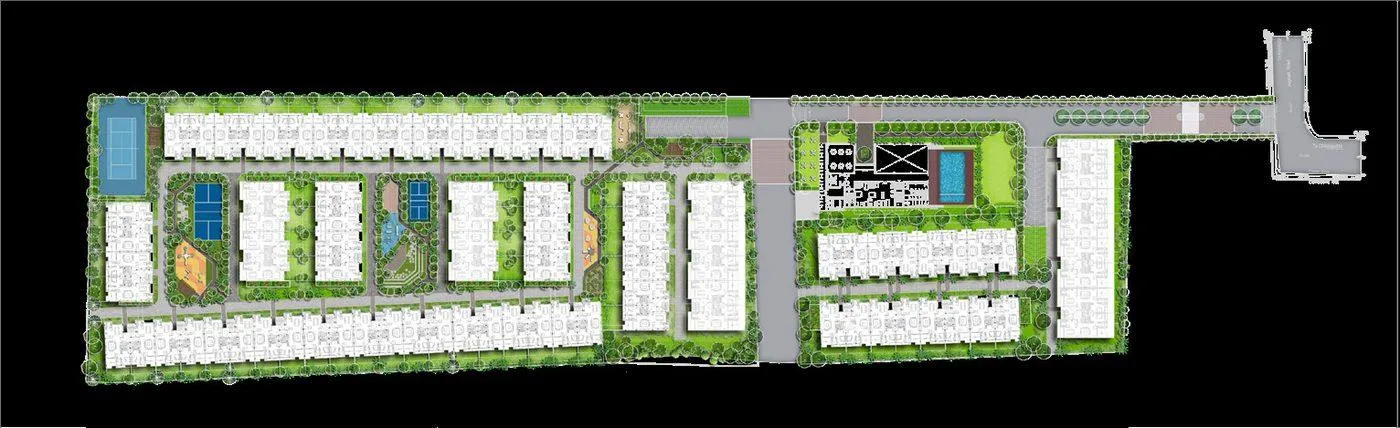
What we can state are the homes themselves. Mizu & Ki is 188 villaments on about 8 acres, built G + 4, four homes to each cluster. Every home is a 4 BHK in one of two layouts.
| Layout | Super built up | Carpet incl. balcony | Efficiency | Outdoor space |
|---|---|---|---|---|
| Type 01 Garden | 3,070 sq ft | 2,463 sq ft | About 80% | Right to use a private garden of about 568 sq ft |
| Type 02 Open Terrace | 3,538 sq ft | 2,809 sq ft | About 79% | Private terrace behind privacy screens |
The room by room detail is in our comparison of the Type 01 garden and Type 02 terrace layouts.
Why does a villament cost more than a flat?
1. More land behind every home
A low rise block spreads far fewer homes across each acre than a tower. Mizu & Ki puts 188 homes on about 8 acres, roughly 24 homes an acre. Phase 1 of Assetz Mizumi Reserve, a tower project, puts 704 homes on 11.4 acres, about 62 an acre.
Divide the land by the homes and Mizu & Ki carries about 1,850 sq ft of land per home, as a simple average across the whole site. Mizumi Reserve Phase 1 carries about 700. Land is one of the largest costs in any Bengaluru project, and a villament buyer pays for more of it. That average is not your legal share, though. The undivided share of land written into your agreement is the figure that counts, so ask for it.
2. A bigger home
Most of the price is still area. Villaments are large by design: Mizu & Ki's published range is 3,063 to 3,800 sq ft super built up. A larger home costs more in total even at the same rate per square foot, which is why comparing totals between a villament and a 3 BHK flat tells you little.
3. Private outdoor space
A garden or a large terrace is the main thing a villament offers that a flat does not. The developer states that some ground level homes at Mizu & Ki have gardens of up to 1,900 sq ft, and terrace balconies run up to 26'9" × 8'10". Check how this space is priced on the sheet. The Type 01 garden is not part of its 3,070 sq ft: that figure is 2,264 sq ft of RERA carpet, a 199 sq ft balcony and 607 sq ft of common area. So the garden may appear as a separate charge, or be built into a premium for that unit. Ask which.
4. Fewer neighbours to share the bills
A clubhouse, security, landscaping and water treatment cost roughly the same to run whether 188 families share them or 1,000 do. Spread across fewer homes, each one carries more. That shows up in the clubhouse charge on the sheet and later in monthly maintenance. Most Bengaluru projects quote maintenance per square foot of super built up area each month, so ask for the rate and multiply it by your home's area before you commit.
Villament vs flat vs villa: what sets the price?
| Price driver | Flat in a tower | Villament | Villa |
|---|---|---|---|
| Land per home | Smallest share | Larger share, still undivided | Usually a plot, or the largest share |
| Size of home | Smallest for the bedroom count | Large, on several floors | Large, often the largest |
| Private outdoor space | Balconies | Garden or terrace | Garden, often terraces too |
| Carpet efficiency | Around 75% in a typical Bengaluru tower | About 80% at Mizu & Ki | Rarely quoted this way |
| Running costs per home | Shared by many | Shared by fewer | Shared by fewest, plus your own upkeep |
If you are still deciding between the formats, our guide to what a villament is, and how it differs from a villa sets them side by side.
How do you compare villament cost per square foot?
You can do most of the comparison before you have a price. The trick is to measure against carpet area, the space inside your own walls, rather than super built up area.
Take any project and divide its super built up area by its carpet area. That ratio tells you how much more you pay per square foot of usable space than the headline rate suggests.
| Home | Super built up ÷ carpet | For every ₹1,000 of headline rate, you pay per sq ft of carpet |
|---|---|---|
| Mizu & Ki Type 01 | 3,070 ÷ 2,463 = 1.25 | About ₹1,246 |
| Mizu & Ki Type 02 | 3,538 ÷ 2,809 = 1.26 | About ₹1,260 |
| Typical tower at 75% | 1 ÷ 0.75 = 1.33 | About ₹1,333 |
So at the same headline rate, a Mizu & Ki home gives you about 7% more usable space for the money than a typical tower flat. That gap is real, but it is not large enough to justify any rate premium on its own. The land share and the garden or terrace have to do the rest of the work.
Once you have a sheet, do the sum properly. Divide the total for one specific home, with every charge included, by its carpet area. That is the only per square foot number worth putting next to another project's.
What is added on top of the villament price?
The figure on a sheet is rarely the cash you will need. Three things sit on top or alongside.
- GST. Payable on a home bought under construction. Check whether the sheet includes it, and confirm the current rate with your CA.
- Stamp duty and registration. In Karnataka these come to about 7.6% of the property value: about ₹7.6 lakh for every ₹1 Cr. They are paid to the state on registration day, not to the developer, and banks usually do not lend against them.
- Deposits and advance maintenance. Often collected at handover. Ask how many months are charged in advance and at what rate.
Our hub has a line by line guide to reading a Bangalore cost sheet that explains each charge you are likely to see.
What to check on a villament price sheet
- The date of the sheet, and how long the price holds.
- The total for one named unit, with every line shown.
- Super built up, RERA carpet, balcony and common area as separate numbers.
- The undivided share of land that goes with the home.
- How the garden or terrace is described and charged: owned, or a right to private use.
- Floor rise, location and corner premiums, and why this unit carries them.
- Car parks included, and the cost of an extra one.
- The monthly maintenance rate and the months collected in advance.
- The payment plan: linked to construction stages or to calendar dates.
Possession matters to the cost too, since rent and instalments can overlap for years. Mizu & Ki is scheduled for 2030; our note on the Mizu & Ki possession date and RERA number explains how to check the completion date filed with RERA.
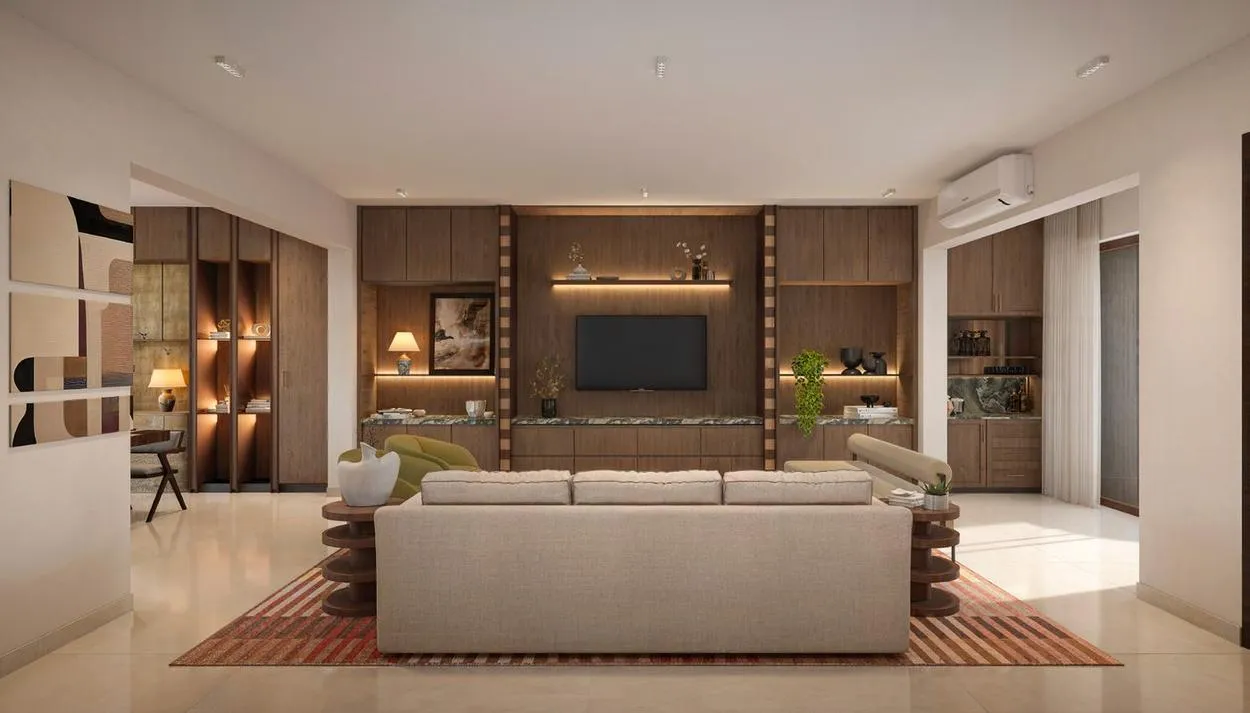 Assetz Mizu & Ki price: what ₹2.85 Cr* means, and what the ++ adds
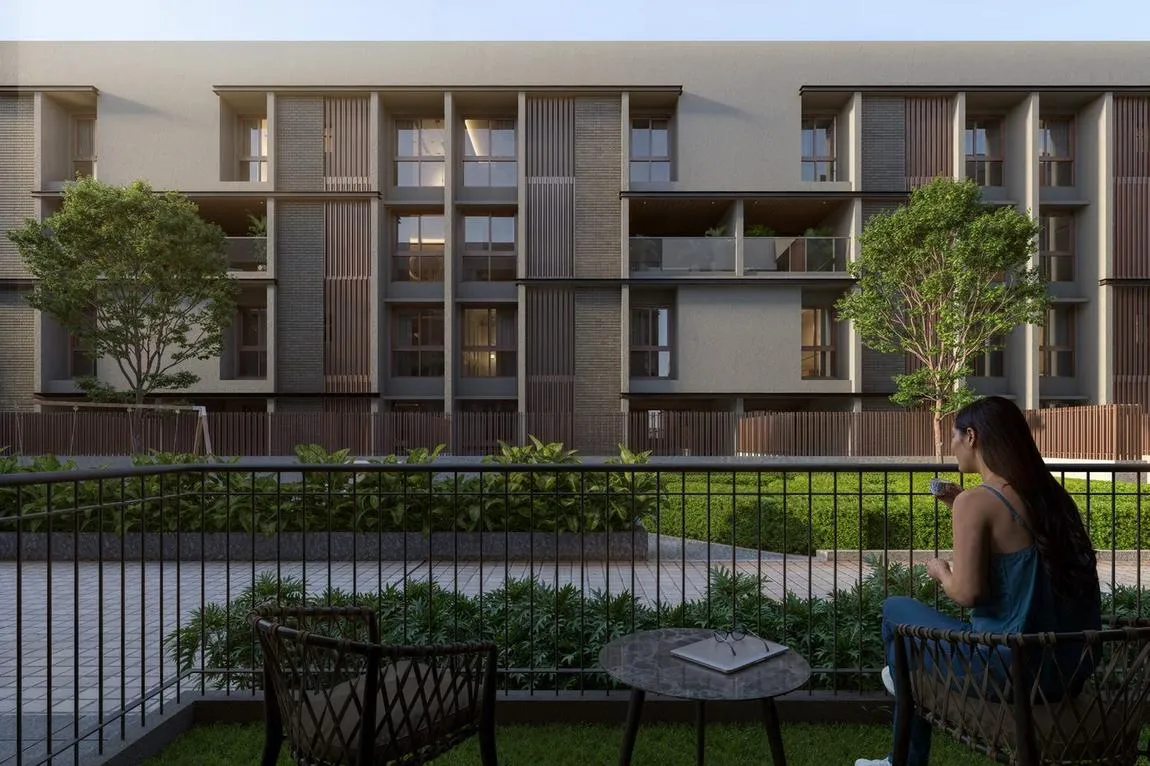 Looking for a 4 BHK villa in North Bangalore? Compare a villament first
 Mizu & Ki possession date and RERA number: what 2030 means for buyers