
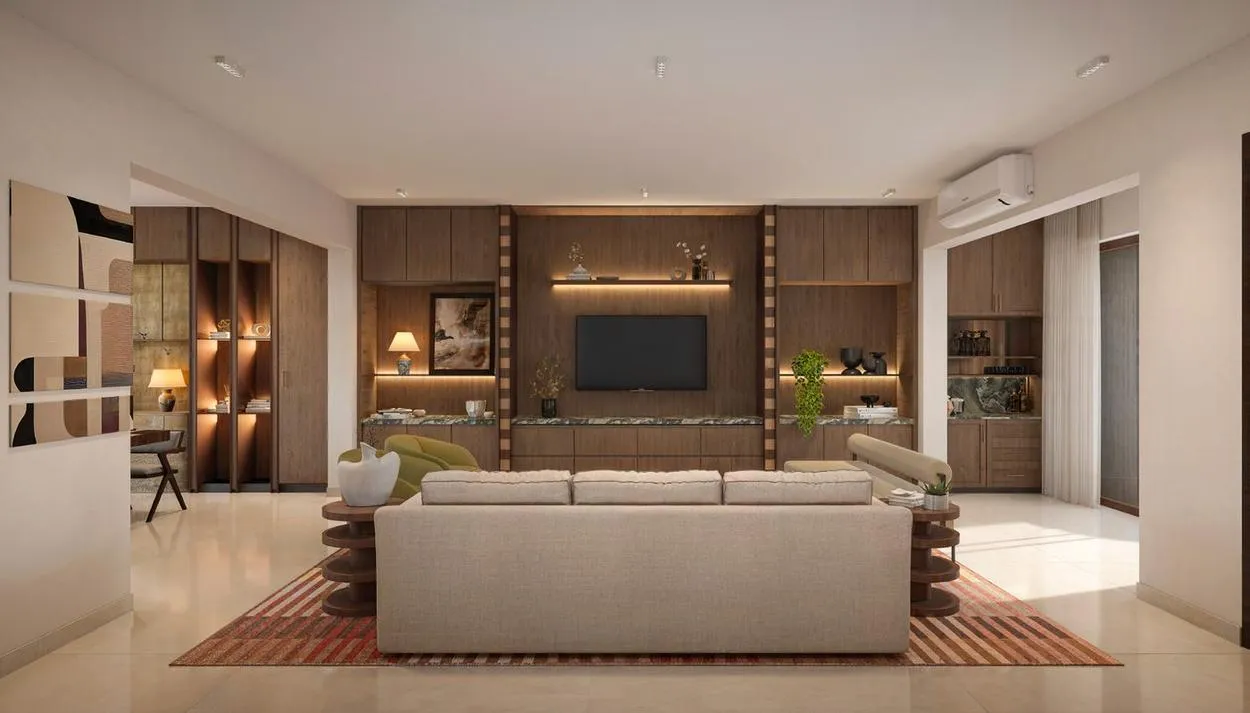
The Mizu & Ki specifications, as listed in the developer's material, include marble flooring in the living room, wooden laminated flooring in the bedrooms, quartz kitchen counters and wooden finish UPVC windows and sliding doors. The villaments are four bedroom homes of 3,063 to 3,800 sq ft. This guide sets out the finishes, the room sizes and the questions to ask before you rely on any of them.
What are the Mizu & Ki specifications?
| Item | Listed finish |
|---|---|
| Living room floor | Marble |
| Bedroom floors | Wooden laminated |
| Windows and sliding doors | UPVC, wooden finish |
| Kitchen counters | Quartz |
| Other stone | Polished black granite |
| Ceilings | Wooden finish false ceilings |
The developer's design philosophy for the project is "quiet luxury", which in material terms means a limited palette: stone, wood and glass.
What are the room sizes?
For the Type 01 Garden villament of 3,070 sq ft, the layout lists these sizes:
| Room | Size |
|---|---|
| Living room | 16'4" by 18'3" |
| Dining | 11'10" by 14'9" |
| Kitchen | 8'6" by 11'10" |
| Bar | 10'9" by 3'9" |
| Sit out | 10'9" by 11'6" |
| Family room (upper floor) | 16'4" by 12'6" |
There are four bedrooms, four toilets and a powder room, and a basement room for a domestic help. See how the Type 01 and Type 02 layouts differ for the larger terrace version.
How big are the terraces and gardens?
Terrace balconies reach 26'9" by 8'10", which the developer presents as considerably larger than the balconies at Mizumi Reserve. Ground level homes can have private gardens of up to 1,900 sq ft, and Type 01 carries the right to use a garden of about 568 sq ft. Ask whether the garden is part of your sale area or a right of use. It changes what you can build, plant and later sell.
What is not in the list?
The material we hold does not name brands for bathroom fittings, switches or kitchen appliances. It also does not state lift arrangements for the blocks, or how much backup power each home receives. These are normal items on a specification schedule. If they are missing from what you are shown, ask for them in writing.
- Bathrooms. Brand, range and finish for taps and sanitary ware.
- Kitchen. Whether cabinets and appliances are included, or only the counter.
- Power. The connected load and the generator backup for homes and common areas.
- Windows. The glass thickness and the number of tracks.
- Marble. The grade, and whether it is polished or honed. Polished marble is slippery when wet and shows scratches.
How does a specification connect to the price?
A finish list is only as good as the clause that holds the builder to it. Compare the schedule attached to your agreement with the brochure line by line. If they differ, the agreement wins. The price guide lists the charges that sit alongside the base rate, and the amenities guide covers the clubhouse and its running costs.
What to check before you book
- The specification schedule, signed and attached to the agreement for sale.
- Whether the garden or terrace is part of the saleable area or a right of use.
- The completion date on the RERA page for PRM/KA/RERA/1251/446/PR/070826/008862.
- A visit to a finished Assetz show home, which shows the real quality of the finishes.
How do you judge a finish before the home exists?
Three practical steps help. First, ask to see a finished sample of the same type, either at the sales gallery or in a completed Assetz project, and look at the joints, the skirting and the window edges. Second, ask for the specification in writing with the grade of each material. Third, ask what happens if a material is unavailable: the agreement should say that any replacement is of equal or better quality, not simply "similar".
Also look at the basement room that comes with a Type 01 villament. The layout lists it as a domestic help room, so ask about ventilation, daylight and the damp proofing used below ground level.
Which finishes cost you money later?
Some finishes need care. Marble marks with acid and stains, laminated wooden floors dislike standing water, and quartz tolerates heat better than wood but still chips at the edge. None of this is a reason to avoid them. It is a reason to ask the sales team for care instructions and to budget for polishing and sealing every few years.
For the full schedule and the cost of your unit, ask us for the price sheet and specification list.
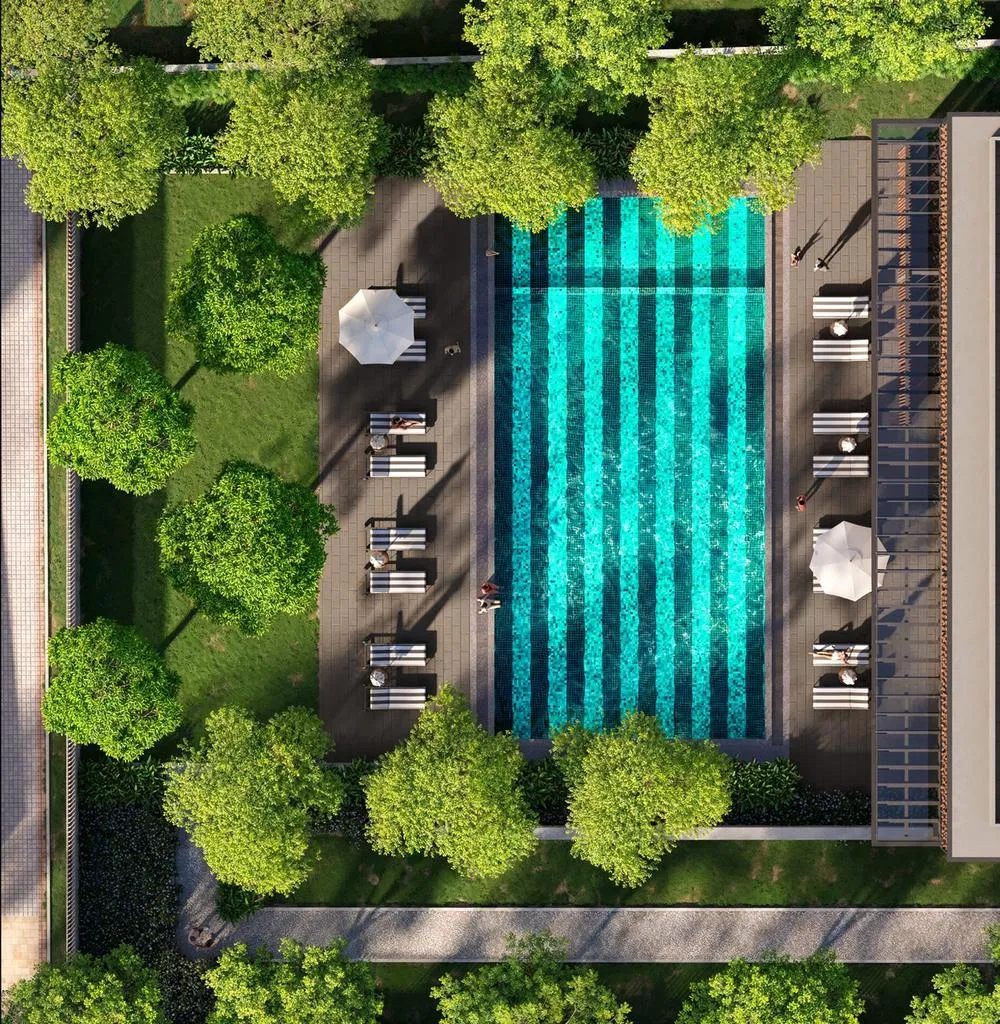 Mizu & Ki amenities: an 18,000 sq ft clubhouse for 188 homes
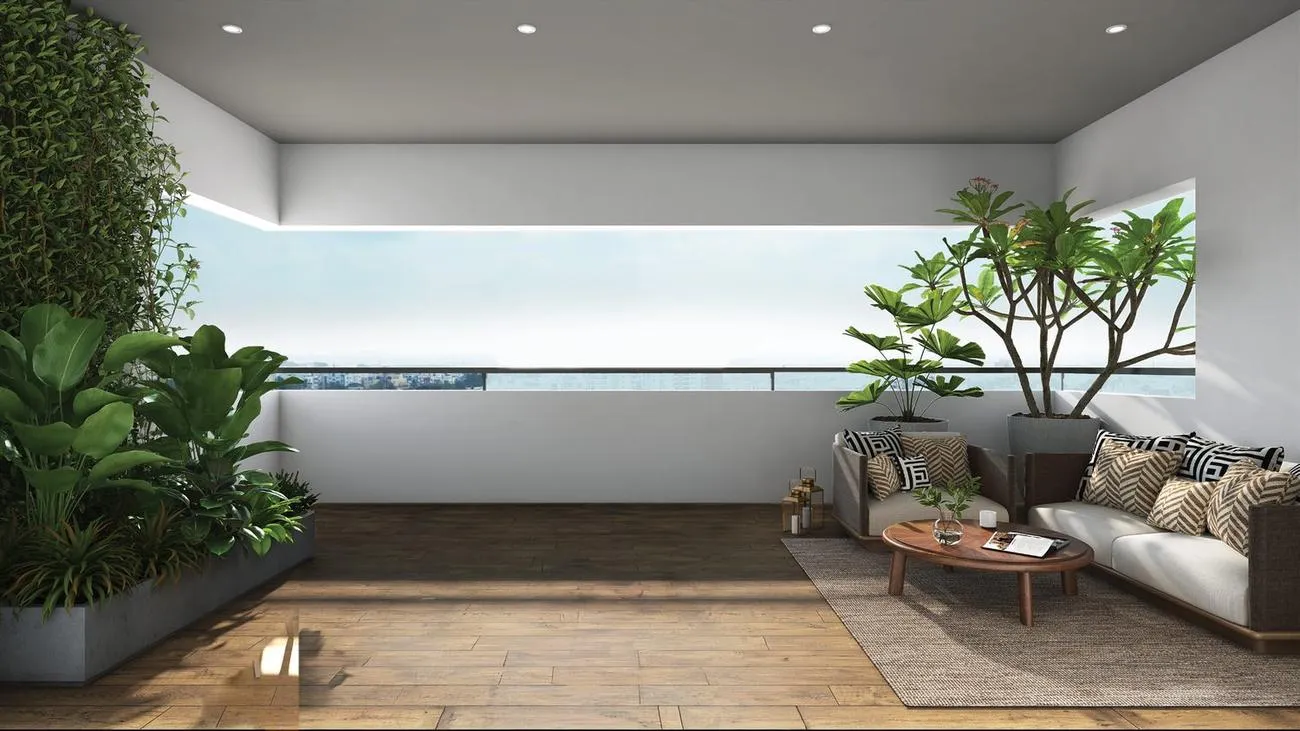 Mizu & Ki Type 01 Garden vs Type 02 Open Terrace: which villament?